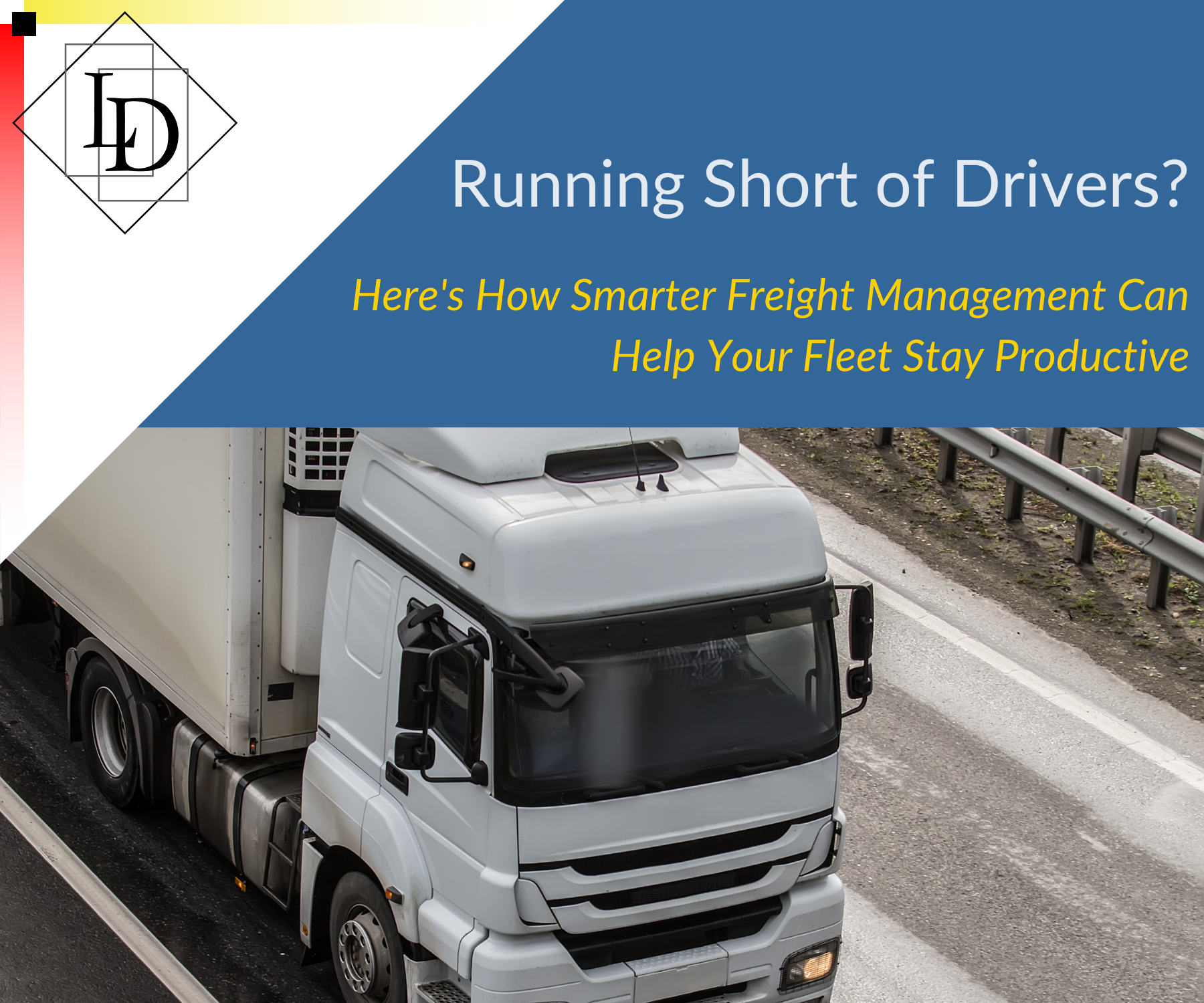
Is Australia Running out of Truck Drivers?
Australia's supply chains move almost entirely by road. Around 80 percent of the country's freight — food, fuel, building materials, medicine — travels in the back of a truck at some point on its journey. That system is now short an estimated 28,000 heavy vehicle drivers, and the gap is widening rather than closing.
A Structural Problem, Not a Blip
The shortage isn't a pandemic hangover or a temporary skills gap. It's structural, and the numbers explain why. Nearly half of Australia's truck drivers are over 55, and industry body IRU estimates that around one in five current drivers will retire by 2030. At the other end of the pipeline, only about 5 percent of the driver workforce is under 25, which is a sign that the industry isn't attracting new entrants fast enough to replace those heading for retirement.
Meanwhile demand is only going one way. Road freight volumes are projected to grow by around 77 percent between 2020 and 2050, and freight industry group NatRoad has argued Australia can't simply grow its way out of the shortfall — it needs to actively build a bigger workforce.
Why the Job Isn't Attracting Recruits
Part of the problem is how entry into the profession works. Heavy vehicle licensing in Australia is largely time-based: a driver qualifies for a higher licence class after holding a lower one for a set period, rather than being assessed on demonstrated competency. Industry groups argue this both slows down capable new drivers and doesn't guarantee that time-served drivers are actually ready for more complex vehicles or conditions. There's a growing push — reflected in the National Road Freight Workforce Action Plan — to move toward competency-based progression instead.
Truck driving also isn't seen as an attractive career path for school leavers, and small operators, who make up much of the industry, often lack the resources to run structured training programs. Surveys of freight businesses have found the large majority still facing severe or very severe driver shortages, with smaller companies particularly exposed because they can't compete on training investment or wages with larger logistics firms.
What's Being Done About It
The response is starting to take shape on several fronts:
- A national action plan. Government and industry are working toward a National Road Freight Workforce Action Plan, expected to be finalised around mid-2026, aimed at coordinating reforms across licensing, apprenticeships and training standards nationally rather than leaving them fragmented across states and territories.
- Licensing reform. The push toward competency-based licensing, rather than purely time-based progression, is a central recommendation — testing drivers on their actual ability to handle a vehicle rather than just how long they've held a permit.
- Apprenticeship incentives. The Australian Trucking Association has floated direct financial support for driver apprentices and the employers who take them on, aimed at making the early, low-paid stages of training more viable for both sides.
Getting More Out of the Drivers You Already Have
Policy reform will take years to fill the pipeline. In the meantime, one of the more practical levers a small or mid-sized operator has is simply using the drivers they've already got more efficiently — cutting the non-driving time and admin overhead that eats into a fleet's effective capacity. This is where transport management software aimed at more day-to-day operations more streamlined, such as ConNote from Perth-based developer Logical Developments, is worth a look.
ConNote is a freight and consignment management system that has been built for the Australian transport industry since 1997, and it's explicitly positioned for operators who find the big enterprise platforms overbuilt for their size — a smaller, pared-back package with add-on modules as a business grows, rather than a one-size-fits-all system. For an owner-operator or small fleet manager currently juggling paper consignment notes, spreadsheets and manual invoicing, that scale-appropriate fit matters: it's software sized for the problem, not a platform that needs a dedicated administrator to run.
A few features are particularly relevant to driver efficiency specifically:
- Single data entry. Consignment details are entered once and flow through from quote to pickup to manifest to invoice, rather than being re-keyed at every stage. Fewer manual handoffs mean fewer delays and errors between the office and the driver.
- A driver companion app. Drivers can see what needs to be picked up and from where directly on a mobile device, rather than relying on phone calls or printed run sheets — cutting the time spent chasing information mid-shift.
- Digital proof of delivery. Sign-on-glass and photo proof-of-delivery, captured through the app, remove the need for paper dockets to be physically returned to the depot before a job can be closed off and invoiced.
- Live job tracking and dispatch. Jobs can be assigned to drivers from a central operations view, with unassigned jobs also visible to drivers directly — useful for smaller fleets without a full-time dispatcher constantly on the phone.
- Customer self-service. A customer portal lets clients generate their own quotes and pickups and track consignments themselves, taking that admin load off both office staff and, indirectly, the drivers who'd otherwise be interrupted for status updates.
The throughline across these features is time recovered — administrative and communication time, not just driving time. Existing users have reported the software helping them capture costs and job details that were previously falling through the cracks in a paper-based process, and cutting down substantially on manual paperwork across departments. For a business that can't simply hire its way past a driver shortfall, getting more billable, on-road hours out of each existing driver — by stripping out the paperwork, phone tag and re-entry that surrounds each job — is a genuine lever, even if it's a smaller one than fixing the national pipeline.
It's not a substitute for the structural fixes the industry needs. But for a small to medium operator deciding where to spend a limited budget while waiting for licensing reform and workforce programs to bear fruit, tools like ConNote address the part of the problem that's actually within their control this year, not in 2030.
Why It Matters Beyond Transport
The consequences of an under-resourced driver workforce are already visible: slower goods distribution, tighter freight capacity, and upward pressure on freight rates that eventually flows through to retail prices. Regional communities, which depend disproportionately on road transport for essentials, are especially exposed when capacity tightens. Warehouses respond to unreliable delivery by either overstocking — tying up cash and storage space — or running lean and risking empty shelves.
In that sense, the driver shortage isn't just a transport-sector workforce issue. It's a quiet but direct input into the cost of living, and a test of whether Australia's freight and training systems can be redesigned quickly enough to keep pace with an economy that will keep needing more trucks on the road, not fewer.
This article draws on industry reporting and workforce data current as of mid-2026, including figures from NatRoad, the IRU, and the National Road Freight Workforce Action Plan. Figures such as the exact size of the driver shortfall vary somewhat between sources and continue to be updated as new workforce data is released.
References
- IBISWorld, Road Freight Transport in Australia Industry Analysis, 2026 — https://www.ibisworld.com/australia/industry/road-freight-transport/456/
- Industry Skills Australia, Addressing Heavy Vehicle Driver Shortages — https://www.industryskillsaustralia.org.au/addressing-heavy-vehicle-driver-shortages/
- NatRoad (submission to the Productivity Commission), National Road Freight Workforce Action Plan, November 2024 — https://engage.pc.gov.au/document/1359